




Content Summary
In the fast-paced world of digital agencies, efficiency is key. Custom plugin development can significantly streamline workflows, allowing teams to focus on high-value tasks rather than repetitive processes. In this article, we will delve into the benefits of creating tailored plugins for agency workflows, illustrating the transformation through a before-and-after optimization scenario.
Understanding Custom Plugin Development
Custom plugins are tailored to meet the specific needs of a business or agency. Unlike off-the-shelf plugins, which may offer generalized solutions, custom plugins are designed to integrate seamlessly with existing systems, providing functionalities that directly enhance workflows.
Before Optimization: Common Agency Workflow Challenges
Before implementing custom plugin solutions, many agencies face a multitude of challenges:
- Repetitive Tasks: Employees spend excessive time on manual processes such as data entry and reporting.
- Inconsistent Data: Using multiple tools leads to fragmented information, making it difficult to maintain accuracy.
- Limited Functionality: Off-the-shelf plugins may not cater to specific agency needs, resulting in workarounds that complicate workflows.
- Poor Collaboration: Teams often struggle with sharing information across departments, impacting project timelines and quality.
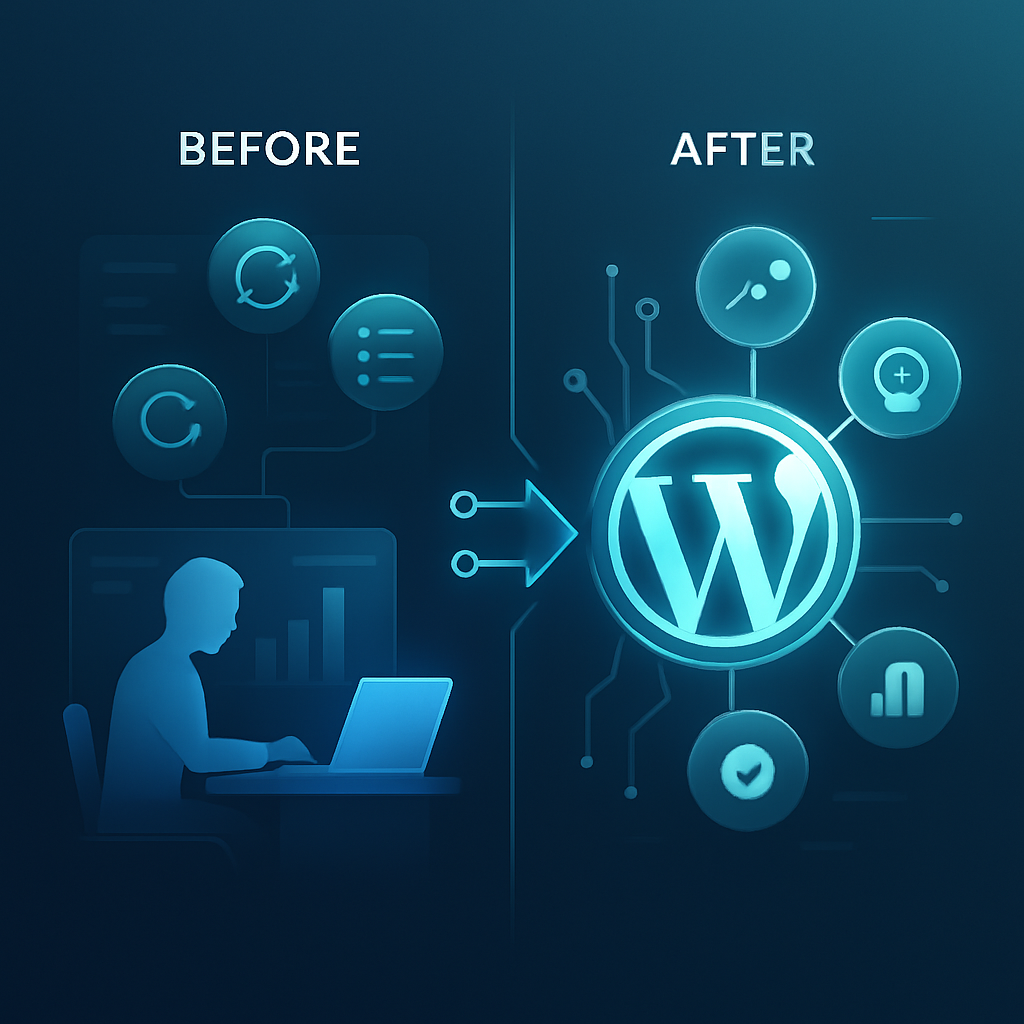
After Optimization: The Transformation with Custom Plugins
Implementing custom plugins can bring about significant improvements in agency workflows. Here’s how a hypothetical agency, Creative Solutions Agency, transformed their operations:
Case Study: Creative Solutions Agency
Prior to optimization, the agency relied on a combination of manual processes and generic plugins. This often resulted in:
- Increased project turnaround time due to manual data handling.
- Higher error rates in reporting, leading to unreliable insights.
- Frustration among team members due to lack of effective collaboration tools.
Custom Plugin Implementation
The agency decided to develop a custom plugin tailored to their specific workflows. The plugin included:
- Automated Reporting: Automatically generates performance reports from project data.
- Centralized Data Management: Integrates with existing tools for a seamless data flow.
- Collaboration Tools: Implements a task management system that enhances team communication.
Results
After deploying the custom plugin, Creative Solutions Agency experienced:
- Reduced Time on Manual Tasks: Automation cut down data entry time by 50%.
- Improved Data Accuracy: Centralized data management reduced errors by 30%.
- Enhanced Team Collaboration: The new task management feature improved project visibility and accountability.
Considerations for Custom Plugin Development
While the benefits of custom plugins are clear, there are important factors to weigh:
Advantages
- Tailored Solutions: Meets specific agency needs.
- Scalability: Can evolve with the agency’s growth.
- Competitive Edge: Unique features can provide a market advantage.
Disadvantages
- Development Time: Requires initial time investment for development.
- Maintenance: Ongoing updates and support are necessary.
- Cost: Custom development can be more expensive than using existing plugins.
Alternatives
If custom development is not feasible, consider:
- Utilizing premium plugins that offer extensive features.
- Combining multiple plugins to achieve desired functionality.
- Leveraging automation tools to streamline existing workflows.
Conclusion
Custom plugin development can revolutionize agency workflows, addressing specific pain points and enhancing overall productivity. While it requires an investment in time and resources, the long-term benefits, including improved efficiency and data management, can far outweigh the initial costs. By carefully considering the unique needs of the agency, custom plugins can provide a tailored solution that maximizes effectiveness and drives growth.
Frequently Asked Questions
- What is a custom WordPress plugin?
- A custom WordPress plugin is a tailored piece of software developed to meet specific needs of a website or agency, enhancing functionality beyond what standard plugins offer.
- How does custom plugin development improve workflows?
- Custom plugins automate repetitive tasks, centralize data management, and offer functionalities that align closely with an agency’s specific processes, leading to increased efficiency.
- What are the potential costs of developing a custom plugin?
- Costs can vary widely based on complexity, development time, and the expertise of the developer, but it’s often a higher initial investment compared to off-the-shelf solutions.
- Can existing plugins be modified instead of creating a new one?
- Yes, existing plugins can often be modified or extended to better meet specific needs, but this may not always achieve the desired level of customization.
- What maintenance is required for custom plugins?
- Custom plugins require regular updates, bug fixes, and compatibility checks with WordPress core updates to ensure continued functionality and security.
- Is custom plugin development scalable?
- Yes, custom plugins can be designed with scalability in mind, allowing them to grow alongside the agency’s evolving needs.
- What if I need help developing a custom plugin?
- Consider hiring a seasoned WordPress developer with experience in custom plugin development to ensure a high-quality solution.
- How can I measure the success of a custom plugin?
- Success can be measured through metrics such as time saved on tasks, reduction in errors, and overall team satisfaction with the new workflows.